


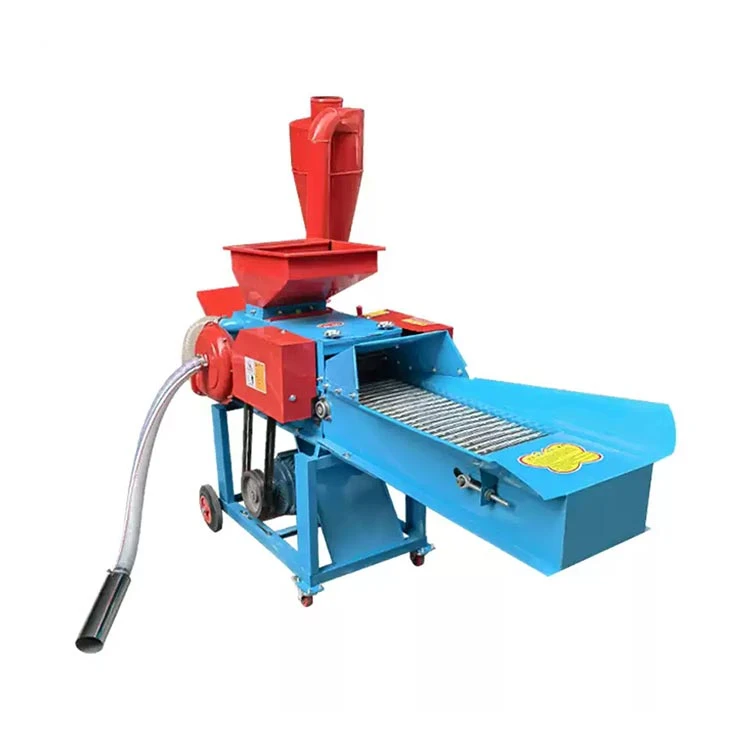
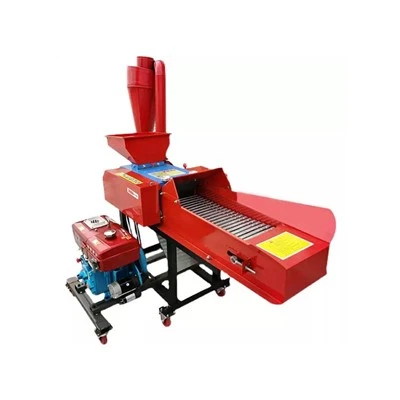
In commercial and small-scale cattle and sheep farming, corn is a key energy-rich concentrate feed. Processing corn to the appropriate particle size with a professional feed grinder not only makes it easier to mix with ingredients such as soybean meal, wheat bran, and forage, but also improves feed intake and nutrient utilization while reducing feed waste. For livestock farmers, selecting a corn feed grinder is not simply about whether it can grind corn. Key factors such as processing functions, finished particle size, capacity, power configuration, and material compatibility directly affect feeding efficiency and operating costs. In particular, multifunctional straw chopper, silage processor, and feed grinder machines can process both concentrate feeds and various types of roughage, providing multiple functions in one machine and reducing equipment investment. They have therefore become a common choice for cattle and sheep farms. Based on practical livestock farming scenarios, this article provides a comprehensive guide to selecting a corn feed grinder for cattle and sheep.

What Farm Feed Materials Can a Corn Feed Grinder Process?
Cattle and sheep feed grinders on the market can generally be divided into single-purpose corn grinders and multifunctional straw chopper, silage processor, and feed grinder machines. Their material compatibility varies significantly, so farmers should choose according to their specific needs.
Single-purpose grinder: Suitable only for grinding concentrate feed ingredients such as corn kernels and other grains. It focuses on concentrate feed processing and features a simple structure and high cost-effectiveness.
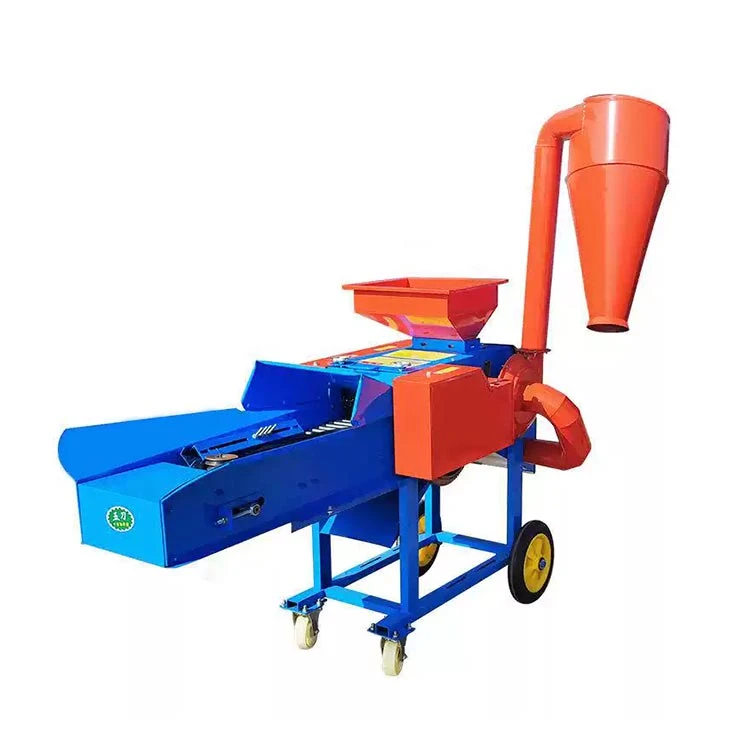
Multifunctional grinder: Integrates chopping, shredding, and grinding functions to process a wide range of livestock feed materials in one machine, including corn kernels, corn stalks, rice straw, wheat straw, fresh grass, hay, and other concentrate and roughage materials.
Most cattle and sheep farms need to process both corn concentrate feed and straw-based roughage on a daily basis. A multifunctional machine is therefore the preferred choice. Our corn feed grinder can fully meet these requirements, helping avoid the repeated purchase of multiple machines, reducing space requirements, and lowering maintenance and operating costs while providing greater versatility.
Recommended Corn Particle Size for Cattle and Sheep
Cattle and sheep are ruminants, so feed should not necessarily be ground as finely as possible. Excessively fine particles can interfere with rumination and digestion, potentially contributing to rumen disorders and poor digestion. On the other hand, particles that are too coarse can make feed more difficult to consume, result in uneven feed mixing, and reduce nutrient utilization. Choosing the appropriate particle size is essential for supporting healthy livestock production and improving feed efficiency. Based on common feeding practices, the recommended particle sizes are as follows:
Finishing cattle / adult sheep: Grind corn to 2–4 mm, with a uniform particle size and slightly coarse particles to support normal rumination and digestion.
Calves / lambs: Because young animals have developing digestive systems, the particle size can be adjusted to 1–2 mm for finer and easier-to-digest feed.
Total Mixed Ration (TMR) feeding: A consistent particle size of 2–3 mm is generally used for mechanized feed mixing and feeding applications.
When selecting equipment, prioritize a machine with interchangeable screens in multiple sizes and adjustable particle size settings. This allows the particle size to be adjusted according to the livestock species, age, and feed formulation to meet the requirements of different growth stages. It is also important to consider the machine's feed intake capability, grinding mechanism, and discharge uniformity to prevent inconsistent particle sizes.
Match Equipment Capacity to Farm Size and Avoid Blind Selection
Equipment capacity directly determines daily processing efficiency. Insufficient capacity can delay feeding, while excessive capacity can result in underutilized equipment and wasted investment. The key principle is to match capacity to actual needs while allowing some reserve capacity. Farmers can accurately calculate the required capacity based on three factors: total daily feed processing volume, daily equipment operating time, and whether both concentrate and roughage need to be processed.
Example:
If a farm needs to process 500 kg of corn per day and plans to operate the machine for 2 hours per day, the required effective capacity should be at least 250 kg/h. It is also important to note that the rated capacity specified by manufacturers is typically based on dry-material operating conditions. Actual capacity can be affected by raw material moisture content, feeding rate, and material type. When selecting equipment, it is recommended to allow 10%–20% additional capacity to avoid insufficient power and low processing efficiency during actual operation.
Small family farms (up to 100 sheep / up to 30 cattle): A small- or medium-sized machine with a capacity of 200–500 kg/h is suitable for meeting daily feeding needs.
Small- to medium-sized commercial farms: A machine with a capacity of 500–1,000 kg/h is suitable for continuous processing requirements.
Large standardized livestock farms: A large integrated machine with a capacity of more than 1,000 kg/h is suitable for long periods of continuous processing.
Higher Motor Power Is Not Always Better; Proper Matching Is Key
Many livestock farmers mistakenly believe that higher motor power means better equipment. In practice, motor power needs to be precisely matched to the machine design, feed materials, processing capacity, and operating conditions. Using a high-power machine for light-duty applications can lead to high electricity consumption and wasted energy, while operating a low-power machine under excessive loads can cause stalling, blockages, motor burnout, and premature wear of the cutting blades.
Different materials have significantly different processing resistance. Dry corn kernels have relatively low processing resistance and energy consumption, while wet straw, fresh grass, silage, and long-fiber straw require more processing force and place higher demands on motor power and blade strength.
When selecting equipment, do not compare machines based solely on motor power. Consider the following factors together: motor power, site voltage compatibility (220V/380V), rated processing capacity, moisture content of the materials to be processed, and continuous operating time. This ensures proper matching between the power system, equipment, and operating conditions.
Single-Purpose Grinder vs. Multifunctional Machine: How to Choose?
1,When to choose a dedicated corn grinder
If a farm purchases all roughage feed and only needs to process concentrate feed ingredients such as corn and other grains, with no need to process straw or fresh grass, a dedicated corn grinder is sufficient. It offers good cost-effectiveness, simple operation, and a low failure rate.
2,When to choose a multifunctional straw chopper, silage processor, and feed grinder
Most cattle and sheep farms that prepare their own feed need to process multiple materials, including corn concentrate, corn stalks, rice straw, fresh grass, and hay. In these applications, a multifunctional machine is the preferred choice. It can perform multiple functions, including corn kernel grinding, straw chopping, forage shredding, and fresh grass cutting. One machine can replace several separate pieces of equipment, saving space, reducing equipment purchase costs, and simplifying the feeding preparation process. It is particularly suitable for small- and medium-sized livestock farms.
How Dry and Wet Corn and Forage Affect Equipment Selection
The moisture content of raw materials is an important factor affecting equipment performance and service life. Dry and wet materials present very different processing challenges, so the equipment must be selected accordingly:
1,Dry materials (dry corn, dry straw, dry hay): These materials are relatively easy to process and provide good discharge performance, but they can generate significant amounts of dust. When selecting equipment, prioritize features such as dust-control systems and enclosed construction to improve the working environment.
2,Wet materials (wet corn, fresh grass, silage, high-moisture straw): These materials are more adhesive and can easily stick to the screen and cause equipment blockages. Standard grinders may not be suitable for these applications. A multifunctional machine with an anti-blockage design, reinforced cutting blades, and a large feed inlet should be selected to reduce frequent blockages and downtime and ensure continuous operation.
When consulting a manufacturer about equipment selection, livestock farmers should clearly specify the types of materials they need to process and their moisture conditions rather than simply requesting a "corn grinder." This helps ensure that the equipment is properly matched to their specific processing requirements.
Key Configuration Details to Check Before Purchasing to Avoid Maintenance Problems
Once the basic equipment specifications meet your requirements, detailed configurations directly affect equipment service life, maintenance costs, and operational safety. These are often overlooked but are important factors when purchasing.
Cutting blades and wear parts
Blades are key working components. Prioritize thickened, wear-resistant alloy steel blades, and confirm that the blades are easy to remove and install and that replacement parts are widely available to reduce future replacement costs.
01
Particle size adjustment system
Choose equipment equipped with multiple sizes of thickened screens that allow precise particle size adjustment to meet the processing requirements of different cattle and sheep and different feed formulations.
02
Feed inlet design
A large-diameter, widened feed inlet can accommodate various materials, including long straw, whole forage, and corn kernels, helping prevent material jams and poor feeding.
03
Safety protection features
Standard safety features should include a full-machine protective guard, anti-jam protection, motor overload protection, and an emergency stop device to minimize operational safety risks.
04
Overall machine design
A simple and well-designed structure, stable machine body, and easy-to-clean construction without hard-to-reach areas make routine cleaning and maintenance easier and support long-term, high-frequency livestock farming operations.
05
Quick Equipment Selection Checklist
Based on your specific livestock farming conditions, use the following factors to identify the right equipment:
Processing materials
Only corn concentrate feed, or also roughage such as straw, fresh grass, and hay.
Farm capacity
Total daily feed processing volume and daily operating hours.
Particle size requirements
Different discharge particle sizes for calves and lambs versus adult cattle and sheep.
Site conditions
Available power supply voltage and the space available for equipment installation.
Material condition
Year-round processing of dry materials, or a combination of dry, wet, and silage materials.
Frequency of use
Continuous daily operation or occasional intermittent use.
Conclusion
The key to selecting a corn feed grinder for cattle and sheep is to match the equipment to actual farming requirements, including the materials to be processed, required capacity, power, and functions. There is no need to blindly pursue high-power, high-capacity, or fully equipped machines. Simple grinders are suitable for small-scale operations processing a single type of material. For cattle and sheep farms that prepare their own feed and process multiple materials, a multifunctional straw chopper, silage processor, and feed grinder with anti-blockage features, wear-resistant components, and adjustable settings is the preferred choice. It can handle both concentrate and roughage in one machine while reducing equipment investment and maintenance costs and significantly improving feeding efficiency.